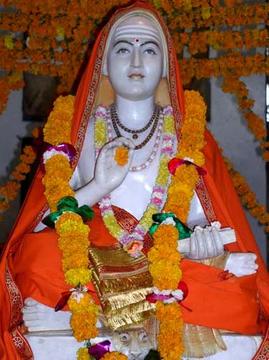
Showing posts with label Shankara. Show all posts

Saturday, October 13, 2007

Some references by Adi Shankara in his Brahma Sutra Bhashya

I am reading the book "Vedanta Explained (Sankara's (Shankaracharya's) Commentary on the Brahma-sutras" by Prof. V.H Date (Here is the reference.). Prof. Date is a student of Shri Ranade.

At the end of second volume, Prof. Date gives a listing of the original verses of which references have been made by Adi Shankara his Brahma Sutra Bhashya and the particular verse from Brahma Sutra where the reference has been made from. Here are the numbers of the specific verses (I am leaving out the big ones like Brihadaranyaka, Chandogya because of their sheer number.).


  1. Aitareya Aranyaka: 2.1.6, 2.2.4-6, 2.4.2-4

  2. Aitareya Upanishad: 1.1.1-2, 1.2,2-3, 1.3,11-13, 3.3

  3. Bhagavad Gita: 2.24, 2.25, 3.17, 3.35, 3.42, 4.37, 5.17, 6.11, 6.45, 7.21-22, 8.6, 8.10, 8.23, 8.26, 10.4, 10.5, 13.12, 15.6, 15.7

  4. Brihadaranyaka Upanishad: ...

  5. Chandogya Upanishad: ...

  6. Isavashya Upanishad: 2 and 7

  7. Jabalopanishad: 4.1, 5

  8. Kathopanishad: 1.2.6, 1.2.7, 1.2.14, 1.2.15, 1.2.18, 1.3.1, 1.3.2, 1.3.3, 1.3.4, 1.3.9, 1.3.10-11, 1.3.12, 1.3.13, 1.3.15, 2.1.1, 2.1.10, 2.1.11, 2.1.15, 2.2.8, 2.2.11, 2.3.2, 2.3.13, 2.3.16

  9. Kausiki Upanishad: 1.2, 1.3, 1.4, 1.7, 2.9-14, 3.2, 3.4, 3.6, 3.8, 4.18-19

  10. Kenopanishad: 1.3

  11. Manusmriti: 1.21, 2.87

  12. Mundakopanishad: 1.1.3, 1.1.5, 1.1.6, 1.2.11, 2.1.1, 2.1.2, 2.1.3, 2.1.8, 2.1.10, 2.2.6, 2.2.8, 2.2.10, 2.2.11, 3.1.1., 3.1.2, 3.1.3, 3.1.8, 3.1.9, 3.2.6, 3.2.7, 3.2.8. 3.2.9, 3.2.10

  13. Prashnopanishad: 2.3, 3.6, 3.9, 3.10, 4.9, 5.2, 6.5

  14. Rig Veda: 2.12.2 10.129.2

  15. Satapatha Brahmana: 1.3.1.26, 10,5.4.16

  16. Shvetashvatara Upanishad: 1.11, 1.12, 2.10, 3.8, 3.9, 4.3, 4.19, 5.8-9, 6.9, 6.11, 6.19

  17. Taittariya Upanishad: 1.11.2, 2.1, 2.4, 2.5, 2.6, 2.7, 2.8, 2.9

Read the rest of this entry >>

Tuesday, May 02, 2006

Sankara Desika Me Saranam


The lion of Vedanta appeared;
the universe of duality rejoiced.


Vaisakha Shukla Panchami is said to be the Jayanthi of Shri Adi Sankaracharya. Some material:

From the preface to Viveka Chudamani by John Grimes:

Unbelievably multi-faceted, he was a teacher, a thinker, a reformer, a commentator, an organizer, a philosopher, a poet, a theologian, a missionary, a mystic, a scholar, a saint, a siddha, a mukta, a divine incarnation, a living legend.


The famous Guru Shisya parampara of Vedanta:

Dakshinamurthi, the primordial Guru is universally understood and then:

Narayanam Padmabhuvam [PadmaBhuvam: one who is born from lotus. Brahma is said to be be born from the a lotus that was rooted in the navel of Shri Vishnu]

Vasistham [Deva Guru] Saktimca tatputra [Shakti: the son of Vasistha] Parasaranca [Vyasa's father] Vyasam Sukam [Vyasa, the compiler of the Vedas. Suka, the son of Vyasa and had recited Bhagavatham to Parikshit. Here ends the familial-guru-sishya-parampara.]

Gaudapadam mahantam Govinda Yogindra athasya sishyam Sri Sankaracharya athasya [Begin the parampara when the Guru's were renunciates. Gaudapada is the Guru of GovindaPada, who in turn in the Guru of Shankara.]

Padmapadamca Hastamalakancha sisyam tam Totakam varttika-kara [The shisya-parampara of Shri Shankara: Padmapada, Hastamalaka, Totaka and Sureshwara (varttika-kara?)] manyan asmad gurun santata-manatosmi [I bow to all of them.]

[Annotation by me.]

Greatness of Shankara's life and teachings (from advaitin mailing list): 1, 2, 3 and 4

Some of Shankara's works from Sanskrit Documents.

From Shankaracharya.org, the famous NisargaDatta Maharaj's I am That is available online.

A succint biography of Shankara, with references to a lot of works.

My other links on the same book: review and shloka on Shankara, transcript and thoughts on Shri AdiShankaracharya, the movie.

The title of the post is from Totakastakam.

...
Sarva Vedanta Siddhanta Gocharam Tam aGocharam
Govindam Paramanandam Sat-gurum-Pranatosymyaham.
...

Chidananda-roopa-Sivoham Sivoham! Read the rest of this entry >>

Friday, December 09, 2005

Shloka on Sankaracharya Bhagavadpada


sruti smriti purananam alayam karunalayam
namami bhagavatpadam sankaram loka sankaram

I salute the divine feet of the great Sankara,
the repository of sacred scriptures,
an abode of immense compassion,
who ever accomplishes the good of the world

Taken from the preface of The Vivekachudamani of Sankaracharya Bhagavatpada: An Introduction and Translation by John A. Grimes. John Grimes, begins the Vivekachudamani with the following Shloka:

Sarva-vedanta-siddanta-gocharam tam agocaram
govindam paramanandam sad-gurum pranto'smy aham


This is what Grimes says about the invocation Shloka:

Traditionally, Indian philosophical treatises begin with an invocation to God and/or one's Guru. Sankara, in this invocation, igeniously, insighfully and subtly reveals the non-duality of Advaita even as he offers his obeisance simultaneously to both God and Guru. He was able to do this because, one of the names for God is Govinda and the name of Sankara's Guru was algo Govinda. Intriguingly, this stanza simultaneously admits both interpretations. Underlying this play of language is the insight that God, Guru and the goal of life for the individual are not different; they are the same.
Read the rest of this entry >>